

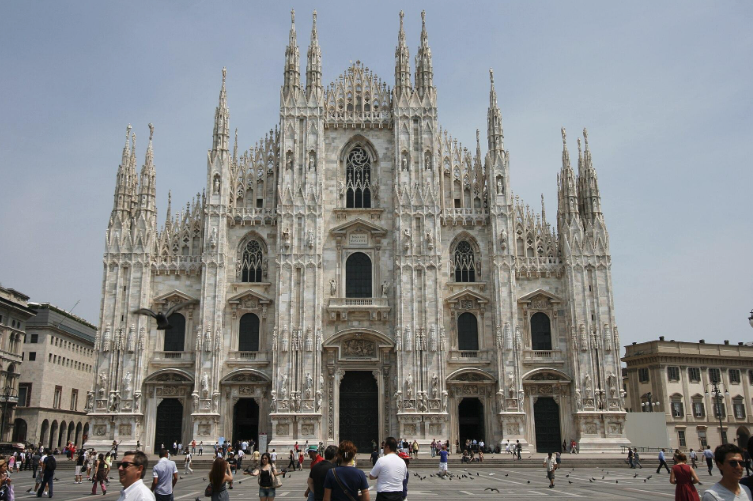
When you stand in front of Milan’s Duomo, it is easy to be impressed by its thousands of statues, spires and intricate decorations. But one of the most fascinating parts of its story begins far from Piazza del Duomo — among the mountains near Lake Maggiore.
The distinctive pale marble with pink veins that gives the Cathedral its unmistakable appearance comes from Candoglia, a small village in the municipality of Mergozzo, at the entrance to the Ossola Valley.
And for centuries, the journey of this marble to Milan passed through the waters of Lake Maggiore.
A story that began in 1387
When construction of Milan Cathedral began, brick was initially considered for the building. Gian Galeazzo Visconti instead decided to use marble.
On 24 October 1387, he granted the Candoglia quarry to the Veneranda Fabbrica del Duomo and allowed the marble to be transported to Milan free of charge along the waterways.
The choice of Candoglia marble would help define not only the colour of the Duomo, but also its architecture, decoration and extraordinary sculptural character.
An incredible journey by water
Transporting enormous blocks of marble from the mountains to Milan in the Middle Ages was no simple task. The solution was an extraordinary water route.
From Candoglia, the marble travelled along the Toce River, entered Lake Maggiore, continued down the Ticino River and then reached Milan through the Naviglio Grande.
Inside the city, a system of locks eventually allowed the boats to reach the Laghetto di Santo Stefano, only a few hundred metres from the Cathedral construction site. The memory of this historic harbour survives today in the name Via Laghetto, in the heart of Milan.
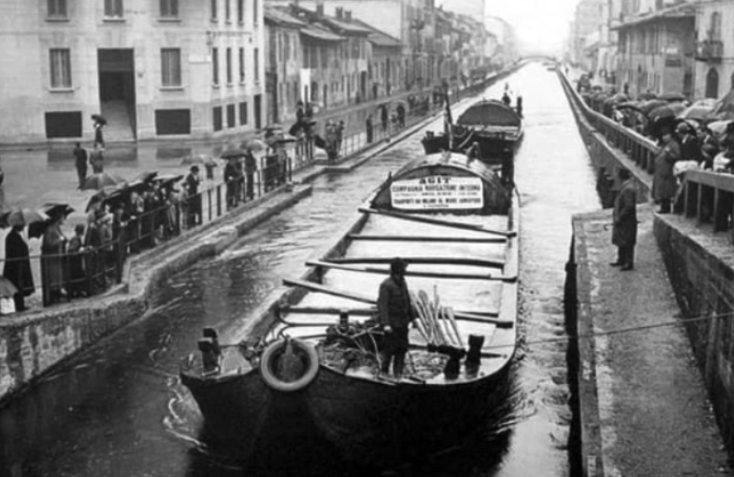
Città Metropolitana di Milano – CC BY-ND 3.0.
From Lake Maggiore to the heart of Milan
For travellers staying on Lake Maggiore, this story creates a surprising connection with Milan.
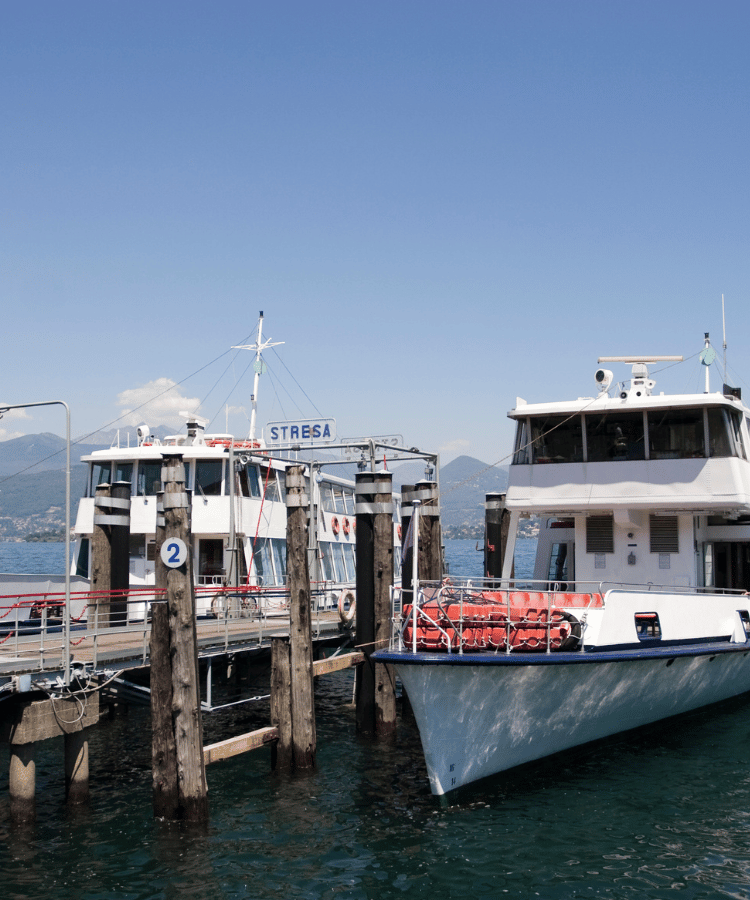
The same lake you see from Stresa was once part of the route travelled by the stone that would become the columns, statues, pinnacles and decorations of one of the world’s most recognisable cathedrals.
Water connected the mountains of Piedmont with the centre of Milan long before trains and motorways existed. Marble continued to be transported to Milan by water until 1920, when road transport replaced the historic route.
Candoglia marble is still part of the Duomo today
The story did not end with the construction of the Cathedral.
The Candoglia quarry is still maintained by the Veneranda Fabbrica del Duomo and continues to provide the material needed for the conservation and restoration of the Cathedral.
It means that the connection between Lake Maggiore and Milan is still alive more than six centuries later.
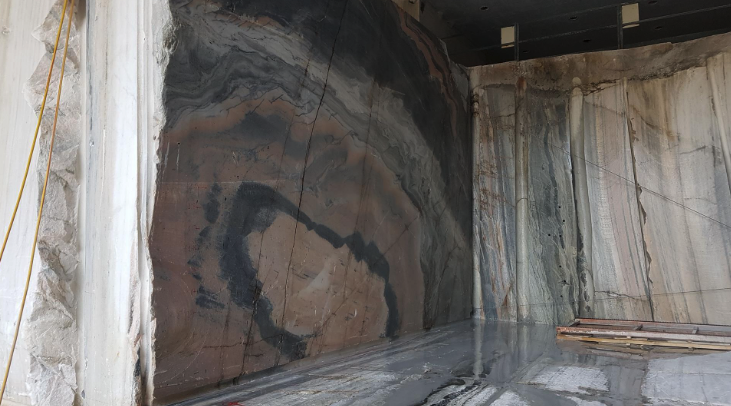
credit: Photo: Giorgio Pallavicini / Wikimedia Commons – CC BY-SA 4.0.
A hidden connection worth discovering
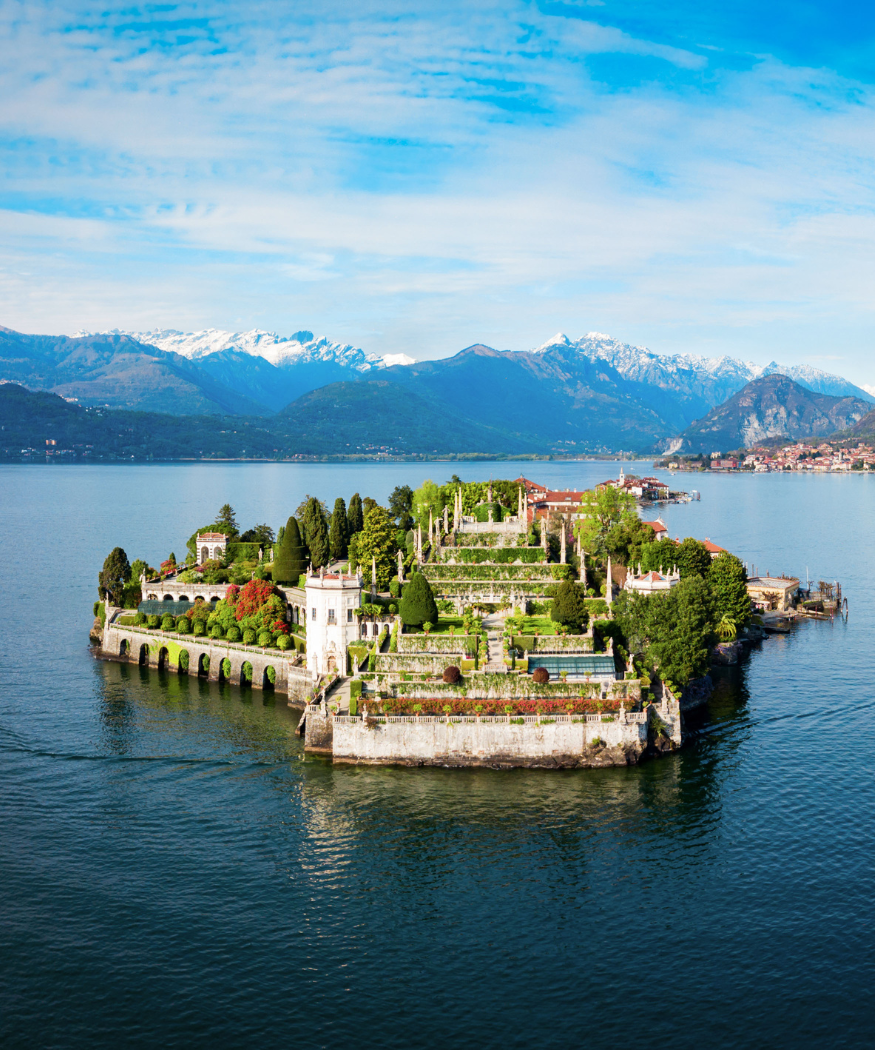
Visitors often think of Lake Maggiore and Milan as two separate destinations: one surrounded by mountains, islands and historic villas; the other famous for architecture, fashion and urban life.
But the story of Candoglia marble tells something different.
Look at the waters of Lake Maggiore in Stresa, and then look at the marble façade of the Duomo in Milan.
They are part of the same story.
Discover “La Via del Marmo”
The fascinating journey of Candoglia marble has recently been brought back to life through “La Via del Marmo – From the Candoglia Quarries to Milan Cathedral”, a cultural project promoted by the Metropolitan City of Milan in collaboration with the Veneranda Fabbrica del Duomo and other local institutions.
In 2026, the project was also presented through an open-air photographic exhibition in Via Dante, Milan, retracing through images the historic water route from the Candoglia quarries to the heart of the city.
The project continues to preserve and promote this extraordinary connection between Lake Maggiore, its waterways and Milan Cathedral.